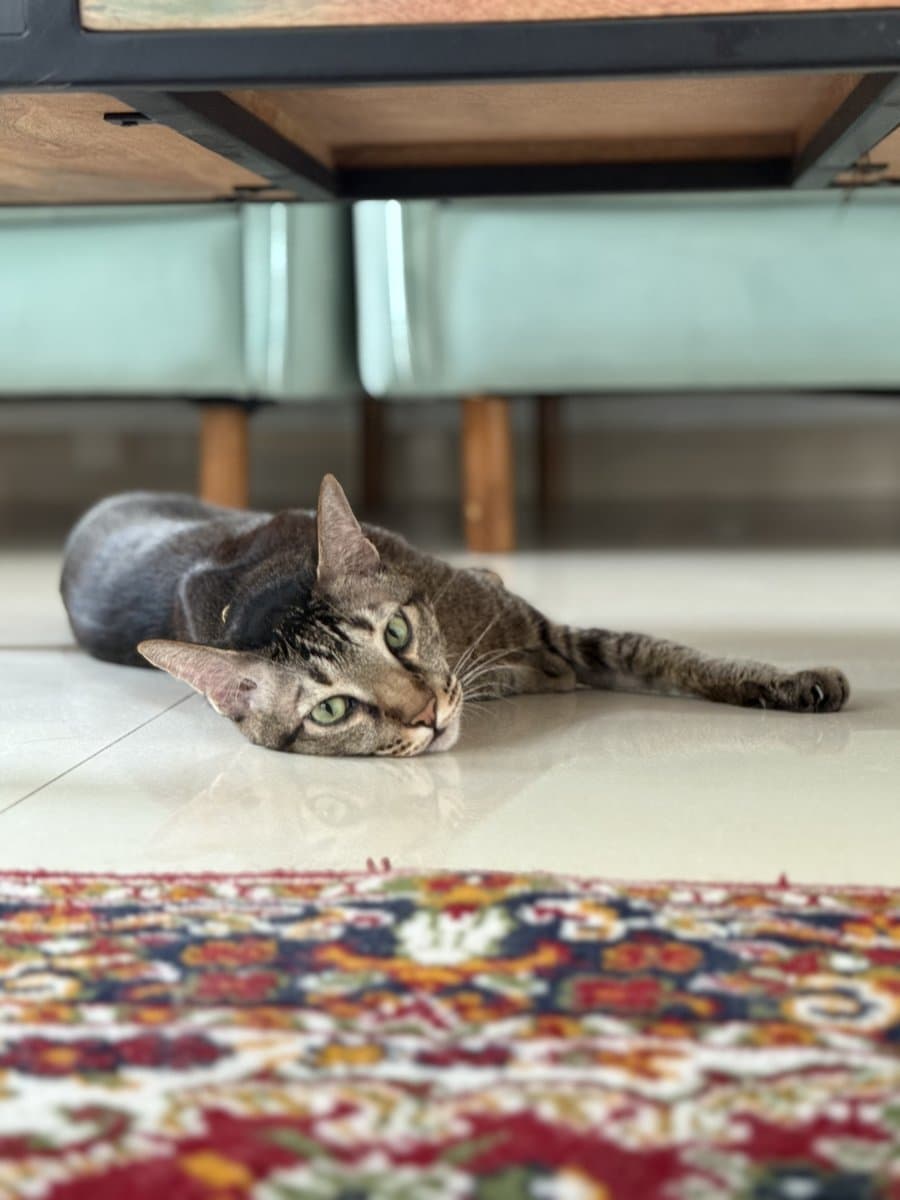

Bringing home a new cat comes with a special kind of excitement, the kind where you spend the whole evening peeking around the door to see whether she has come out from under the towel yet. Cats feel change deeply, so the first few weeks shape how safe your new friend feels with you, and a little planning helps her settle much faster.
This guide works for a tiny kitten from a foster home and for a grown desi cat rescued from the colony next door, and it covers the safe room, the settling in and the health basics that matter most for cats in India. If a dog is joining your family instead, our companion guide on welcoming a new dog has you covered.
Set Up a Safe Room Before She Arrives
A small quiet room gives a new cat a territory she can actually make sense of, and the San Francisco SPCA describes this early confinement as one of the kindest things you can offer her.[9]
A bathroom, a study or a spare bedroom works well, set up with food, water, a litter box, a scratching post and a few toys.[9] Add a cosy hiding spot like an open carrier or a cardboard box with a soft towel inside, and block off spaces you cannot reach, like the gap under the bed or behind a heavy almirah, because a frightened cat may wedge herself in there for days.[8] Place the litter box on the far side of the room from her food and water, since most cats prefer to eat well away from where they go to the toilet.
If another pet has spent time in the room you picked, give it a thorough clean so it does not smell like someone else's territory.[10]
Many Indian flats have open balconies, sliding windows and grills with wide gaps, and a curious cat can squeeze through spaces that look far too small for her. Consider netting the balcony and checking every window before she gets the run of the house.
Let Her Say Hello at Her Own Pace
Hiding is how most new cats cope with a big change, and it helps to know this is completely normal behaviour. Shelters commonly tell adopters to expect hiding for at least a few days and sometimes a few weeks while the cat learns every exit and hiding spot around her.[10]
The kindest thing you can do is sit quietly on the floor of her room with a book or your phone and let her come to you when she feels ready. Talk to her softly, offer a treat from your open hand and keep your early visits fairly short.
Keep her in that room until she shows real curiosity about the rest of the house, then open things up gradually.[8] If you already have pets, keep everyone apart for now and let them get used to each other's scent through the closed door before any face-to-face meeting. When the time comes, keep the first meetings short and supervised, with treats on hand for everyone involved.
Book the First Vet Visit in Week One
A vet visit in the first few days gives you a health baseline and a clear plan, and it helps you catch anything the foster or rescuer may have missed.
Core vaccines. The World Small Animal Veterinary Association (WSAVA) lists vaccines against feline parvovirus (the cause of panleukopenia), calicivirus and herpesvirus as core for every cat in the world.[1]
Rabies in India. WSAVA treats rabies as a core vaccine for cats as well wherever the disease is endemic, even in places where the law does not require it.[1] WHO describes India as endemic for rabies and estimates the country accounts for about 36 percent of the world's rabies deaths,[3] so your vet will want your cat protected too.
The kitten schedule. Kittens usually get several doses of core vaccines two to four weeks apart, with the final dose at 16 weeks of age or later and a booster at or after 26 weeks.[1] For rabies, the 2024 guidelines ask vets to follow local rules and the vaccine's leaflet,[1] and an earlier WSAVA summary suggests a first dose at around 12 weeks in endemic areas,[2] so ask your vet how they plan to fit rabies into your kitten's schedule.
FeLV and FIV testing. The American Association of Feline Practitioners recommends testing cats for feline leukaemia virus and feline immunodeficiency virus as soon as possible after you bring them home.[4] This matters even more if your new cat spent time around colony cats or will share a home with another cat. A positive result can feel scary, and it helps to know that some cats with FIV live for many years with a good quality of life.[4]
Deworming. Kittens pick up worms very easily, and Cornell University's shelter medicine team advises deworming them every two weeks until at least 12 to 16 weeks of age.[6] Your vet will suggest a schedule for an adult cat after the first check.
Carry whatever papers came from the foster or rescuer, even the messy handwritten ones, because every old date helps your vet fill in the gaps.
Keep Lilies Out of Your Home
Flowers deserve a careful look in any cat home, and lilies sit right at the top of that list. The US FDA says every part of true lilies and daylilies is toxic to cats, and licking a little pollen off the fur or drinking the vase water can cause fatal kidney failure in under three days.[5]
The simplest rule is to keep lilies out of wedding bouquets, festival arrangements and balcony gardens altogether in a cat home.
Make Your Kitchen Cat Safe
Indian kitchens smell irresistible to cats, and a few of the ingredients that make our food so good can make them quite unwell.
The ASPCA's poison control experts explain that onion, garlic and chives can irritate the gut and damage red blood cells, which can lead to anaemia.[7] That puts leftover curries, gravies and anything finished with a tadka firmly off the menu for your cat, however politely she asks from the kitchen counter. The same experts flag alcohol and raw yeast dough as dangerous for pets.[7]
If your cat does get into something risky, note roughly how much she ate and call your vet straight away.[7] It also helps to tuck away hair ties, thread and rubber bands, since playful kittens love to chase and chew them.
For the full list of risky foods, see our guide to toxic foods in an Indian kitchen, or check a single ingredient with our food safety checker.
Build Trust Through Gentle Handling
Once she starts coming to you on her own, try brief daily sessions of gentle brushing, touching her paws and letting her explore an open carrier with a treat tucked inside. Keeping these moments short and pleasant can make future vet trips and nail trims much easier for both of you. Kittens often warm up to handling quickly, while an older cat from a colony may need far more time before she trusts your hands, and that slower pace is completely fine.
Start Her Health Story on Day One
The first weeks are when you know the least about your cat and learn the most, so it really helps to write things down while they are fresh. Note what she eats, how much water she drinks, how often she uses the litter box and what her poop looks like, because tummy changes can happen while food and surroundings are new and your vet will want those details.
If you would like everything in this guide as a list you can tick off, our free first weeks checklist has it in one place.
A patient home is the best welcome you can give a cat, and the trust you build during these quiet first weeks will carry the two of you through many years of slow blinks and warm laps.
📖 Related Guides
Frequently Asked Questions
References & Sources
- WSAVA. 2024 Guidelines for the Vaccination of Dogs and Cats. https://wsava.org/wp-content/uploads/2024/05/2024-Guidelines-for-the-Vaccination-of-Dogs-and-Cats.pdf
- World Health Organization, India. Rabies in India. https://www.who.int/india/health-topics/rabies
- American Association of Feline Practitioners. 2020 AAFP Feline Retrovirus Testing and Management Guidelines. https://ufl.pb.unizin.org/app/uploads/sites/51/2021/02/2020-AAFP-Retrovirus-Guidelines.pdf
- US Food and Drug Administration. Lily toxicity in cats. https://www.fda.gov/AnimalVeterinary/ResourcesforYou/AnimalHealthLiteracy/ucm206751.htm
- Cornell Shelter Medicine Program. Kittens, puppies and ascarids. https://blogs.cornell.edu/cornellsheltermedicine/?p=194
- Veterinary Information Network. WSAVA Feline Vaccination Guidelines summary. https://vin.com/doc/?id=8506325
- ASPCA Animal Poison Control. People Foods to Avoid Feeding Your Pets. https://www.aspca.org/pet-care/aspca-poison-control/people-foods-avoid-feeding-your-pets
- Maddie's Fund. Helping a Shy or Fearful Cat Adjust to Your Home. https://MaddiesFund.org/helping-a-shy-or-fearful-cat-adjust-to-your-home.htm
- San Francisco SPCA (via San Diego Humane Society). Introducing a Cat to a New Territory: The Importance of Confinement. https://www.sdhumane.org/resources/pdf/introducing-a-cat-to-a-new-territory.pdf
- Humane Society of Southern Arizona. Preparing to Bring a New Cat Home. https://hssaz.org/wp-content/uploads/2024/02/preparing-to-bring-a-new-cat-home.pdf
About the authors
Pet Health Writers
Our editorial team researches, collates, and publishes evidence-based pet health content tailored to the unique needs of Indian pet parents.